
𝖠̶𝖻̶𝗈̶𝗎̶𝗍̶ 𝖴̶𝗌̶
It is all about him
The Field Beyond Moab
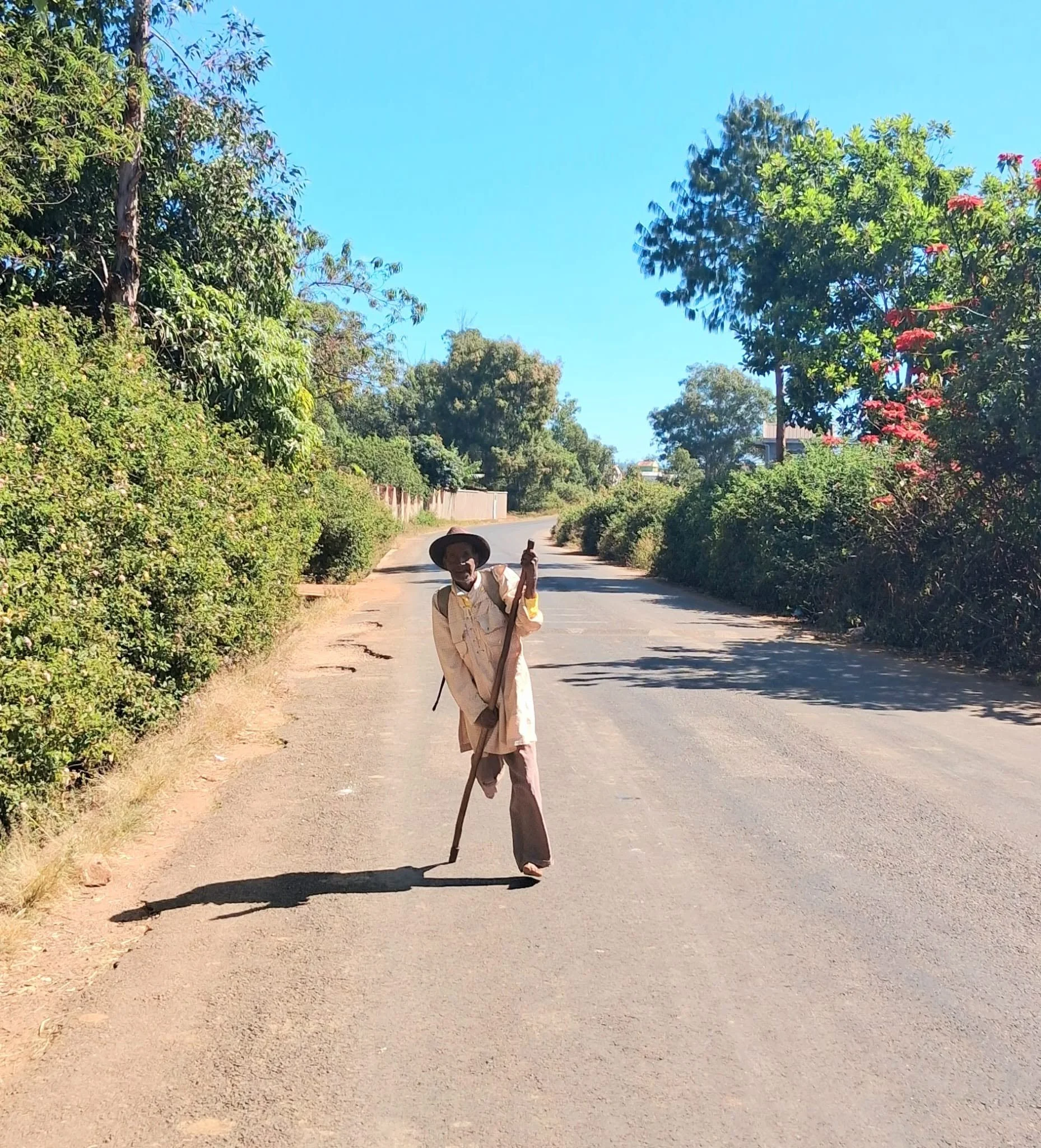
Three times in two years I had the privilege of looking deeply into his eyes.
Each time, something in me fell silent. The space between us seemed to bend under the weight of his gaze — not a gaze of begging, but of endurance. His hand, worn and knotted by years of survival, held tightly to the long wooden crutch that had become almost part of his body: staff, hoe, spade, companion.
He had walked distances I could hardly imagine. His shoes were what the Creator had given him. His clothing, reduced to a few faithful layers of fabric, carried the dust of many seasons. Yet there was no theatrical poverty in him. There was only the hard brightness of reality at the outer edge of civilisation — and a dignity that refused to disappear.
We were gathered in Ambohidanerana, in the Itasy region of Madagascar, reading the first chapter of Ruth. I spoke of Naomi, who had gone down to Moab full and returned empty. I spoke of loss, exile, hunger and the long road back.
But as I read, I realised that Moab was not far away. We were already standing there.
There was, as yet, no barley harvest in sight.
Around us sat brothers and sisters whose bodies carried visible marks of exclusion: lameness, blindness, weakness, age, abandonment. Yet their lives were not theological abstractions. They were not “beneficiaries” in a report. They were people waiting for a field.
Then came Boaz.
In Ruth’s story, redemption did not arrive as sentiment. It came through land, protection, harvest, food, honour and belonging. Boaz did not merely feel compassion; he opened a field. He made room for the vulnerable to glean, to work, to eat, to be seen, and to become part of God’s redemptive story.
That is the vision that took hold of me there.
Disability inclusion cannot remain a language of pity. It must become a field — a real one. A place of soil, seed, tools, training, access, work, harvest and shared dignity. A place where farmers with disabilities are not hidden at the margins, but recognised as producers, partners and image-bearers of God.
When the reading ended, the man with the crutch rose to leave. There was hope in his face — not easy hope, not decorative hope, but the kind that begins to move again toward a promise.
I thought of Naomi, no longer called Mara. I thought of Ruth, once a stranger in Moab, now gathered into the lineage of redemption. I thought of the green hills of Itasy, and of fields still waiting to be opened.
May our work in Madagascar become such a field.
Not charity alone.
Not pity.
But restoration through land, labour, community and grace.
“The Lord is my shepherd; I shall not want. He makes me lie down in green pastures; He leads me beside still waters. He restores my soul.”
— Psalm 23:1–3
Ambohidanerana, Itasy, Madagascar
A reflection based on the founder’s personal encounter.
Ready to Enjoy our Inclusive Coffee Sourcing Mission?
Send us a quick note and let’s make disablity inclusive sourcing thrive for African coffee farmers